

From a training center in Shiraz to the formation of the National Cardiopulmonary Resuscitation (CPR) Training Network of Iran.
The Iranian Resuscitation Center (IRC) was established with the aim of enhancing the quality of cardiopulmonary resuscitation (CPR) education, promoting standard and evidence-based training, and creating an integrated system for teaching CPR skills across the country.
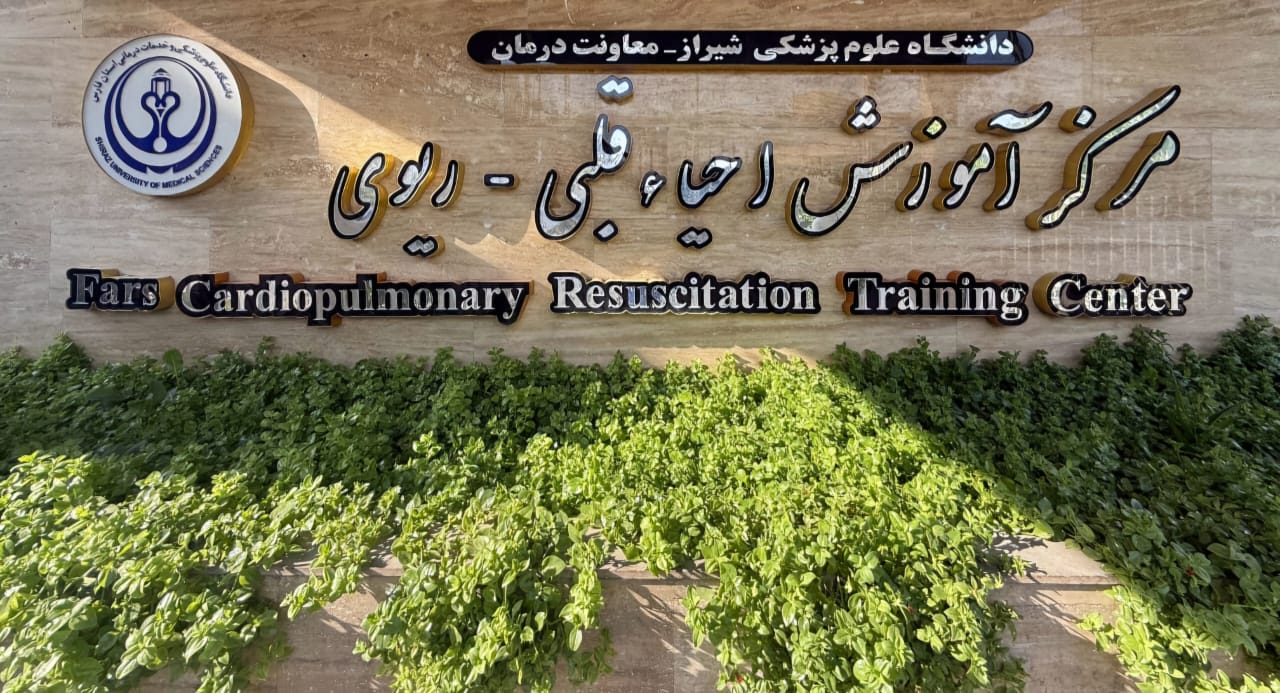
The story of the IRC began in the city of Shiraz, where the Fars Cardiopulmonary Resuscitation Training Center (FCTC) commenced its activities in November 2017.
From the very beginning, FCTC adopted a distinct approach compared to conventional training programs, focusing on structured, standardized, skill-based, and evidence-based education aligned with the latest scientific evidence. The center's training programs have been designed in accordance with internationally recognized standards, particularly the guidelines and recommendations of the American Heart Association (AHA), and are regularly updated to reflect the most current knowledge.
The primary goal of FCTC was never limited to offering a single training course; rather, it aimed to establish a proper educational culture in the field of cardiopulmonary resuscitation (CPR)—a culture in which training is standardized, measurable, evidence-based, and tailored to the real-world needs of healthcare teams.
Over the years of its activity, the experience of FCTC has demonstrated that standardized CPR training can play a significant role in enhancing the preparedness of healthcare personnel to effectively manage cardiac arrest and other life-threatening conditions.
Gradually, this approach attracted the attention of medical universities and training centers across the country, paving the way for the transfer of this experience and the establishment of similar training centers in other provinces.
Along this path, in addition to its educational activities in Fars Province, FCTC expanded its approach toward the development of a national network of standardized cardiopulmonary resuscitation (CPR) training centers.
With the first National Annual Cardiopulmonary Resuscitation (CPR) Congress, organized by FCTC, a new chapter began in the development of CPR education in the country.
During this congress, it was officially announced that the name and structure of the parent center had been changed from FCTC to IRC – Iranian Resuscitation Center, meaning Iran's Center for Resuscitation Education.
This name change was not merely a change of title; rather, it signified a fundamental shift in the center's approach—from a local training institution to a national structure dedicated to the development, standardization, and expansion of cardiopulmonary resuscitation (CPR) education in Iran.
Based on this structure, the IRC, as the parent center, is responsible for leading and developing the network of cardiopulmonary resuscitation (CPR) training centers. New centers established with support, training, and knowledge transfer from the parent center will operate within the IRC network.
Thus, an integrated structure was formed:
Subordinate centers will operate under the IRC name with their own specific identifiers, while maintaining their regional identity and capacities.
The initial center that began its activities in 2017 in Shiraz under the name of FCTC, now serves as:
continues its activities as the Shiraz Cardiopulmonary Resuscitation (CPR) Training Center and serves as one of the key centers within the IRC network, playing a vital role in training, scientific development, and the transfer of knowledge and experience to other centers.
Continuing along this path, and through collaboration and the transfer of knowledge and experience by the faculty of the FCTC, a Cardiopulmonary Resuscitation (CPR) Training Center was also established at Hormozgan University of Medical Sciences.
As the second standardized Cardiopulmonary Resuscitation (CPR) training center within the IRC network, this center began its activities under the name:
.
The establishment of IRC-HCTC was the first practical example of expanding the IRC network structure beyond Fars Province, demonstrating that the educational model and standards used at the parent center could be successfully implemented in other universities and regions across the country.
This path will continue with the goal of establishing more centers across different regions of Iran.
One of the fundamental principles of the IRC network is to establish a balance between national standardization and regional educational capacities.
Each member center of the IRC network will operate within the framework of the principles and standards established by the parent center, while maintaining its own identity and specialized capacities.
This structure helps ensure that the quality of CPR education, training content, teaching methods, skills assessment, and educational processes all follow a clear and reliable standard
The goal is that every learner, whether receiving training in Shiraz, Hormozgan, or any of the future IRC centers across the country, benefits from a standardized and reliable educational framework.
All IRC educational activities are designed based on the principles of modern education, scientific evidence, and internationally recognized standards.
Course content is continuously reviewed and updated in accordance with the latest scientific recommendations and guidelines, particularly the standards of the American Heart Association (AHA).
At the IRC, resuscitation education is not merely about the transfer of theoretical knowledge
Learners must be able to translate their knowledge into practical skills in a simulated environment, evaluate their performance, identify their weaknesses, and practice the necessary skills for real‑world situations through team‑based training.
For this reason, IRC training is based on a combination of:
are built upon.
The IRC and its member centers offer a diverse range of cardiopulmonary resuscitation (CPR) and emergency care training courses, tailored to the capacity and activity level of each center
These courses may cover a wide range of training, from basic to advanced levels, including Basic and Advanced Life Support for adults, children, and neonates; neonatal resuscitation; airway management; resuscitation of trauma patients; special conditions; and other specialized courses related to cardiopulmonary resuscitation (CPR).
The IRC aims to develop cardiopulmonary resuscitation (CPR) training across a coherent and standardized educational pathway—ranging from public education to specialized training for healthcare teams.
Cardiac arrest is a time-dependent event, and the interval between its occurrence and the initiation of effective resuscitation measures can determine the patient’s outcome.
For this reason, the IRC’s mission is not limited solely to training healthcare personnel.
With a broader perspective on the concept of the "Chain of Survival," this center seeks to promote a culture of cardiopulmonary resuscitation (CPR), raise public awareness, enhance the preparedness of individuals and organizations, and expand access to standardized resuscitation training.
Every trained individual can make a difference in a moment when there may be only minutes to save a life.
Another major activity of the IRC is the annual cardiopulmonary resuscitation (CPR) congress.
This congress is organized with the aim of providing a platform for the exchange of knowledge and experience among physicians, nurses, emergency medical technicians, anesthesiologists, and other members of the healthcare team. It also seeks to bring together the latest findings, technologies, innovative educational approaches, and challenges in the field of cardiopulmonary resuscitation (CPR) within a scientific and interdisciplinary setting.
Holding this congress is part of the IRC’s mission to foster an active scientific community in the field of resuscitation and to create opportunities for collaboration among specialists, researchers, instructors, and educational centers across the country.
The vision of the IRC is to establish a national, standardized network of cardiopulmonary resuscitation (CPR) training centers across Iran—a network that enhances access to high-quality, up-to-date training in different regions of the country and establishes a clear, unified standard for resuscitation education.
The IRC strives to take an effective step toward enhancing the quality of cardiopulmonary resuscitation (CPR) education across the country through the development of regional centers, the training of competent instructors, the continuous updating of educational programs, the adoption of modern training and simulation methods, and the establishment of collaboration between academic and educational institutions.
The journey of the IRC began with a single training center in Shiraz, but from the very start, its vision extended far beyond a local institution.
Today, the IRC represents a commitment to establishing a coherent and national structure for cardiopulmonary resuscitation (CPR) education—a framework in which knowledge, experience, and training standards are transferred from one center to another, and every new center adds a new link to this growing network.
IRC-FCTC in Shiraz, IRC-HCTC in Hormozgan, and future IRC centers across Iran are all part of a shared journey:
Better Standards, Stronger Skills, Greater Readiness—More Lives Saved.